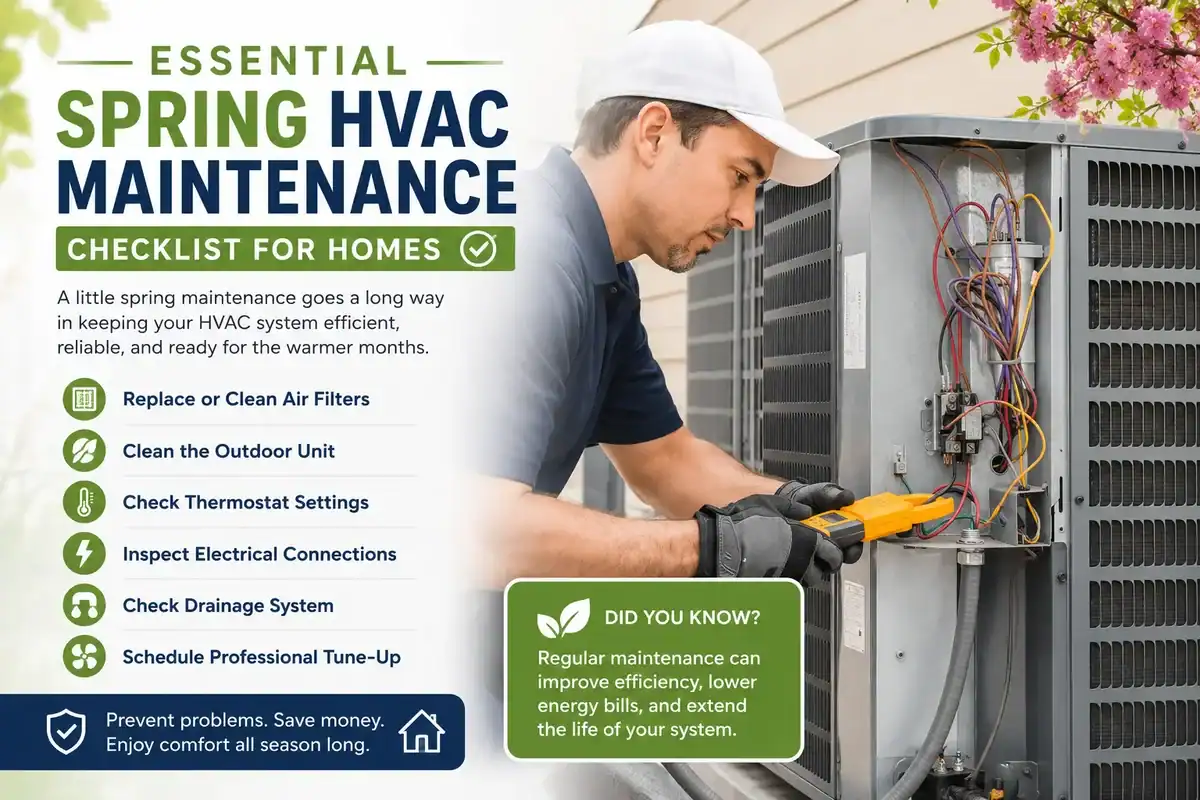
Essential Spring HVAC Maintenance Checklist for Homes
It happens every year. The first genuinely hot day of spring rolls in, you reach for the thermostat, and nothing. The AC kicks on, blows lukewarm air for a few minutes, then gives up entirely. A little seasonal HVAC maintenance in spring could have prevented the whole headache.
Your home’s heating and cooling system works hard all year. By the time spring arrives, filters are clogged, coils are dusty, and small issues that started in winter have had months to grow. The good news: a focused spring maintenance session takes just a few hours and can save hundreds of dollars in energy costs and emergency repair bills.
This checklist covers every critical task for your home’s heating and cooling services broken down into what you can do yourself and what’s best left to a certified HVAC contractor. Bookmark it, save it, and run through it every spring.
Why Spring HVAC Maintenance Is Worth Every Minute
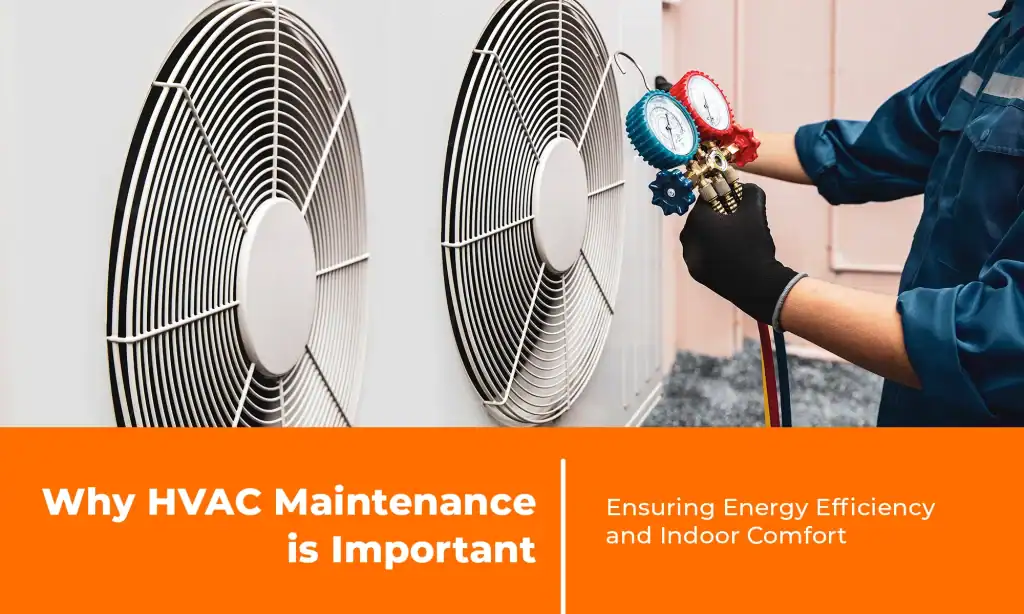
Most homeowners think about their HVAC system only when something goes wrong. But proactive seasonal maintenance is one of the highest-return investments you can make in your home. Here’s why it matters:
15% Average reduction in energy bills when HVAC systems receive regular preventive maintenance. A neglected system works harder, runs longer, and costs more every single month.
System lifespan: A properly maintained central air system lasts 15–20 years. Skip maintenance, and you’re looking at 10–12 years potentially cutting the life of a $5,000–$12,000 system nearly in half.
Indoor air quality: Dirty filters and clogged ducts circulate dust, pollen, mold spores, and allergens through your home. Spring, when pollen counts peak, is exactly when your filtration system needs to be at its best.
Warranty protection: Many HVAC manufacturers require documented annual maintenance to keep the warranty valid. Skipping service isn’t just risky for your system it can void thousands of dollars in coverage.
The Complete Spring HVAC Maintenance Checklist
Work through this checklist before the first hot stretch of the season. Each task is tagged so you know exactly what you can handle yourself and what requires a professional.
DIY
Homeowner can complete safely
Pro
Requires certified HVAC contractor
Filters & Indoor Air Quality
DIY
Replace the Air Filter
Check your filter and replace it if it’s been 1–3 months since the last swap. Choose a MERV-8 to MERV-13 filter for the best balance of airflow and particle capture. A clean filter is the single highest-impact thing you can do for both energy efficiency and indoor air quality.
DIY
Clean Return Air Vents & Registers
Remove vent covers, vacuum accumulated dust, and wipe down with a damp cloth. Blocked or dirty vents reduce airflow balance and force your blower motor to work harder than it should.
Pro
Professional Duct Inspection & Cleaning
If you notice excessive dust, musty odors, or visible mold near vents, schedule a full ductwork inspection. An HVAC service company can identify leaks, seal gaps, and clean the duct system tasks that require specialized equipment and training.
Cooling System Prep (AC)
DIY
Clear & Clean the Outdoor Condenser Unit
Remove the winter cover (if used), clear debris, leaves, and branches from around the unit, and gently rinse the condenser coils with a garden hose. Keep at least 2 feet of clearance on all sides for proper airflow. Never use a pressure washer the fins bend easily.
DIY
Test the AC Before You Need It
On a mild day (above 65°F), run a test cycle for 15–20 minutes. Listen for unusual noises, check that cool air is reaching all rooms, and note how long it takes to reach the set temperature. Catching a weak-cooling issue in April beats discovering it in mid-July heat.
Pro
Refrigerant Level Check & Evaporator Coil Inspection
Low refrigerant is a common cause of poor cooling and is illegal to handle without EPA 608 certification. A technician will also inspect the evaporator coil (the indoor component) for dirt buildup or freeze damage both of which quietly drain system efficiency all season long.
Pro
Flush the Condensate Drain Line
The AC drain line removes humidity pulled from indoor air. It clogs with algae and mold over winter, leading to water damage and system shutdowns. A technician clears it with compressed air or a wet-vac and treats it to prevent future buildup.
Heating System Wrap-Up
DIY
Clean Around the Furnace & Air Handler
Vacuum dust and debris from around the furnace or air handler cabinet. Check the cabinet door seal is intact. Clear any storage items within 3 feet of the unit this is both a maintenance and a fire safety issue.
Pro
Blower Motor & Heat Exchanger Inspection
A cracked heat exchanger is one of the most dangerous HVAC issues it can leak carbon monoxide into your living space with no obvious warning signs. This inspection requires a trained eye and sometimes a camera. Schedule it as part of your annual HVAC tune-up.
Thermostat & Controls
DIY
Switch & Calibrate Your Thermostat
Change the mode from HEAT to COOL and replace thermostat batteries if it uses them. Update the schedule for spring and summer hours raising the setpoint by just 2°F when you’re away can shave 3–5% off your cooling bill. If your readings seem off, consider a calibration check.
DIY
Upgrade to a Smart Thermostat (Optional)
If your thermostat is more than 7–10 years old, spring is the perfect time to upgrade. Modern smart thermostats can cut cooling costs by 10–23% through learning schedules and geofencing. Most homeowners can install one in under an hour.
Not sure which tasks to tackle first? A certified HVAC service company can perform a complete spring tune-up in under 2 hours, covering refrigerant, coils, drainage, and safety checks in one visit. Many offer spring specials before peak season pricing kicks in.
DIY vs. When to Call an HVAC Contractor
The general rule: if it involves electricity beyond a standard outlet, refrigerant, gas lines, or confined internal components call a professional. Here’s a quick breakdown:
Safe for Homeowners
- Replacing air filters
- Cleaning condenser exterior
- Clearing debris around units
- Thermostat adjustments & battery replacement
- Cleaning vent covers
- Running system test cycles
Call an HVAC Contractor
- Refrigerant handling (EPA 608 required)
- Electrical component inspection
- Heat exchanger integrity check
- Ductwork sealing & balancing
- Drain line flush & treatment
- Coil deep-cleaning & lubrication
Look for NATE-certified technicians (North American Technician Excellence) when hiring. NATE certification is the HVAC industry’s gold standard and ensures your technician is tested on real-world system knowledge not just theory.
How Often Should You Schedule HVAC Maintenance?
A good maintenance rhythm prevents both surprise breakdowns and gradual efficiency loss. Most residential HVAC services providers recommend the following schedule:
| Task | Frequency | Who |
| Air filter replacement | Every 1–3 months | DIY |
| Condenser cleaning & visual check | Each spring | DIY |
| Thermostat schedule update | Spring & fall | DIY |
| Full system professional tune-up | Twice yearly | HVAC Contractor |
| Ductwork inspection & sealing | Every 3–5 years | HVAC Contractor |
| Heat exchanger safety inspection | Annually (fall) | HVAC Contractor |
Many local heating and cooling services providers offer annual maintenance contracts a single yearly fee covers both spring and fall tune-ups. If you want one less thing to remember, it’s worth the investment.
Frequently Asked Questions
At minimum, schedule a professional HVAC tune-up twice a year once in spring (before AC season) and once in fall (before heating season). Between professional visits, replace your air filter every 1–3 months and visually inspect your outdoor unit monthly during summer. Consistent maintenance prevents the gradual efficiency loss most homeowners never notice until their utility bills spike.
A professional HVAC tune-up typically covers: refrigerant level check, evaporator and condenser coil inspection, condensate drain flush, blower motor lubrication and inspection, thermostat calibration, electrical connection tightening, heat exchanger integrity check (fall service), and a full system performance test. Most tune-ups take 60–90 minutes and cost $80–$150 per visit far less than a mid-summer emergency repair call.
Yes, for several important tasks. Homeowners can safely replace air filters, clean the exterior condenser unit, clear debris around the system, update thermostat settings, and clean vent covers. However, anything involving refrigerant, gas lines, electrical components, or internal mechanical parts requires a certified HVAC contractor. Attempting refrigerant work without EPA 608 certification is illegal and potentially dangerous.
Save this checklist to Pinterest: “Spring HVAC Maintenance Checklist, Save this before the heat hits! Essential DIY + pro tips for homeowners.
#HVACMaintenance #SpringHome #HomeChecklist #HVACTips
Your Spring HVAC Maintenance Action Plan
Spring HVAC maintenance isn’t glamorous, but it’s one of the most impactful things you can do for your home before summer arrives. A clean filter, a cleared condenser, and a calibrated thermostat can cut your energy bills by double digits. A full professional tune-up can add years to your system’s life and protect your family’s comfort through the hottest months.
Start with the DIY tasks this weekend, they take under an hour and cost almost nothing. Then schedule your professional spring service before peak season fills up every technician’s calendar in your area.