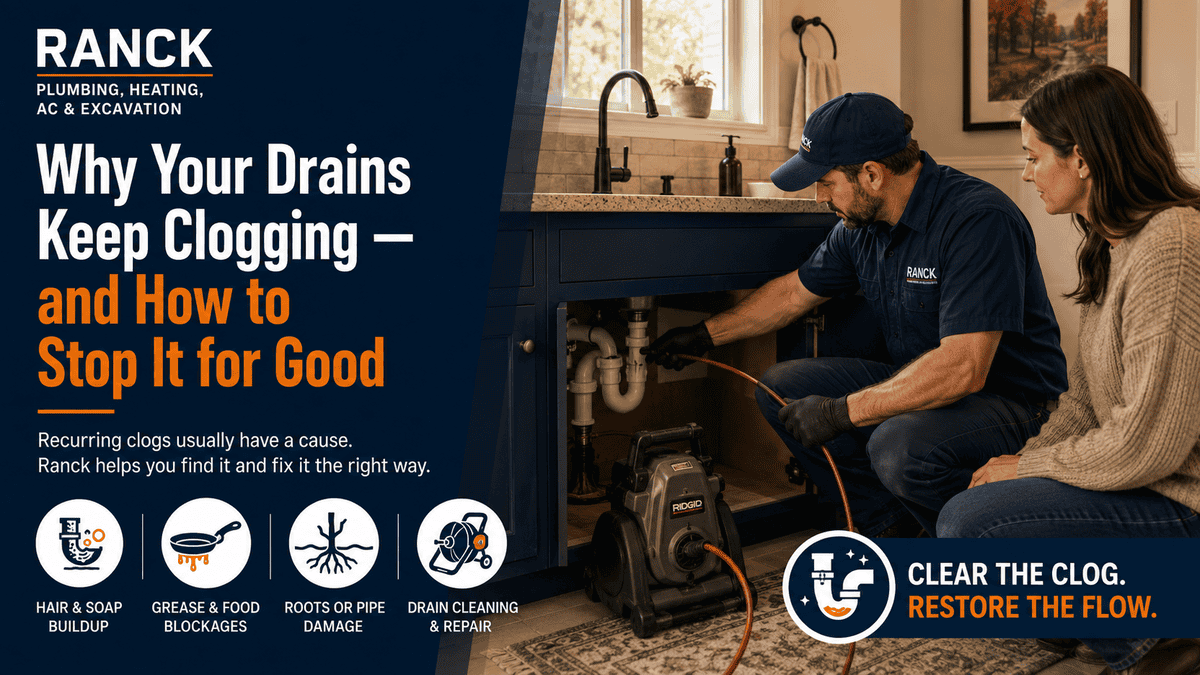
Why Your Drains Keep Clogging - and How to Stop It for Good
If your drains keep clogging no matter how many times you clear them, the problem is almost never bad luck. Recurring drain clogs usually point to a specific cause, and that cause is still there every time you pour a bottle of drain cleaner down the sink. The good news: once you identify the root issue, you can stop the cycle for good. This guide breaks down the most common reasons drains keep backing up in Lancaster County homes and exactly what to do about each one.
Is Your Drain Clog a Surface Problem or a Pipe Problem?
This is the first question worth answering, because the fix is completely different depending on the answer.
Surface clogs sit near the drain opening or just below it. Hair, soap scum, and food debris are the usual culprits. These clogs respond well to a drain snake or plunger, and they tend to stay fixed once cleared.
Pipe-level clogs form deeper in your plumbing system. Grease buildup, mineral deposits, and tree root intrusion are common causes. If your drain clogs again within a few weeks of clearing it, or if multiple drains in your home are slow at the same time, you are almost certainly dealing with a pipe-level problem.
A professional drain camera inspection is the fastest way to know for sure. A technician inserts a small camera into your pipe and can see exactly where buildup or damage is located, without any guesswork.
Why Grease and Soap Buildup Are the Most Common Culprits
Grease is the number one cause of recurring kitchen drain clogs. When you pour cooking oil, bacon grease, or even soapy dishwater down the drain, it travels through your pipes in liquid form. As it cools, it sticks to the pipe walls and hardens. Over weeks and months, that layer gets thicker. Eventually, it catches everything else that passes through, and your drain starts backing up regularly.
Soap scum causes the same problem in bathroom drains. Most bar soaps contain fat, and that fat bonds with minerals in your water supply to form a hard residue inside your pipes.
What actually works: Stop pouring grease down the drain entirely. Pour it into a container and throw it in the trash. For existing buildup, a professional hydro-jetting service uses high-pressure water to scour the inside of your pipes clean, removing grease and soap scum that drain cleaners cannot touch.
Hard Water Is Making Your Clogs Worse
Lancaster County has moderately hard water. That means your water supply carries dissolved calcium and magnesium minerals that deposit inside your pipes over time. These mineral deposits, called scale, narrow the inside diameter of your pipes gradually. A pipe that once drained freely starts moving water more slowly, and everyday debris that would have flushed through easily now catches and builds up.
You might notice this pattern: your drains seem to get slow even when you have been careful about what goes down them. Hard water scale is likely contributing.
Two solutions work well together. First, a water softener or whole-home filtration system treats the water before it ever reaches your pipes, slowing or stopping scale buildup at the source. Ranck Plumbing installs and services water treatment systems throughout Lancaster County. Second, periodic hydro-jetting removes the scale that has already formed inside your pipes.
Tree Roots: The Hidden Cause of Outdoor and Sewer Line Clogs
If you have trees in your yard and you are dealing with slow drains throughout your home, not just one fixture, tree root intrusion is a serious possibility. Tree roots naturally grow toward moisture and nutrients. Your sewer line carries both. Roots enter through small cracks or loose joints in older pipes and grow inside the line over time.
Warning signs of root intrusion include:
- Multiple drains backing up at the same time
- Gurgling sounds from your toilet when you run water elsewhere in the house
- Sewage odors in your yard or basement
- Patches of unusually green or fast-growing grass over your sewer line
A camera inspection will confirm root intrusion within minutes. Depending on how far the roots have grown, the fix may be hydro-jetting to cut the roots back, pipe lining to seal cracks from the inside, or sewer line replacement for severely damaged sections. Ranck Plumbing handles all three, including full excavation when it is needed.
Why Store-Bought Drain Cleaners Make the Problem Worse Long-Term
It is worth addressing this directly, because most homeowners reach for a bottle of chemical drain cleaner first. These products work by using a caustic chemical reaction to dissolve organic material. They can clear a partial clog temporarily. But they have two significant drawbacks.
First, they do not remove the buildup that caused the clog. They punch a temporary hole through it. The remaining buildup is still there, and the clog returns faster than before.
Second, the chemicals in drain cleaners are hard on your pipes. Repeated use can corrode older metal pipes and weaken PVC fittings over time. What starts as a clog problem can turn into a leak problem.
For a recurring clog, the better path is a professional drain cleaning. A plumber uses a motorized drain snake or hydro-jet to physically remove the obstruction and clean the pipe wall, not just react with part of the clog and leave the rest behind.
How a Plumbing Maintenance Plan Prevents Clogs Before They Start
The most reliable way to stop recurring drain clogs is to stop them from forming in the first place. A routine maintenance plan from a licensed plumber does exactly that.
At Ranck Plumbing, maintenance plan customers receive regular system check-ups that include drain inspections and cleaning as needed. Catching slow buildup early, before it becomes a full blockage, saves you the cost and inconvenience of an emergency call.
Consider what recurring clogs actually cost. A single emergency drain service call is significantly more expensive than routine maintenance. If you are dealing with clogs every few months, a maintenance plan pays for itself quickly, and you avoid the frustration of a backed-up sink or flooded basement altogether.
Ranck has served Lancaster County since 1953, and 89% of our work comes from returning customers and referrals. That track record reflects a straightforward approach: find the actual cause, fix it correctly the first time, and help you keep it from coming back.
Stop the Cycle: What to Do Next
If your drains keep clogging, start with a professional drain inspection. A camera inspection gives you a clear picture of what is happening inside your pipes, so you are not guessing or paying for repairs that do not address the real problem.
Ranck Plumbing offers drain cleaning, camera inspections, hydro-jetting, sewer repair, and water treatment services across Lancaster County and surrounding areas, with 24/7 availability for emergencies. Call Ranck Plumbing to schedule a drain inspection and find out exactly why your drains keep backing up, so you can stop it for good.