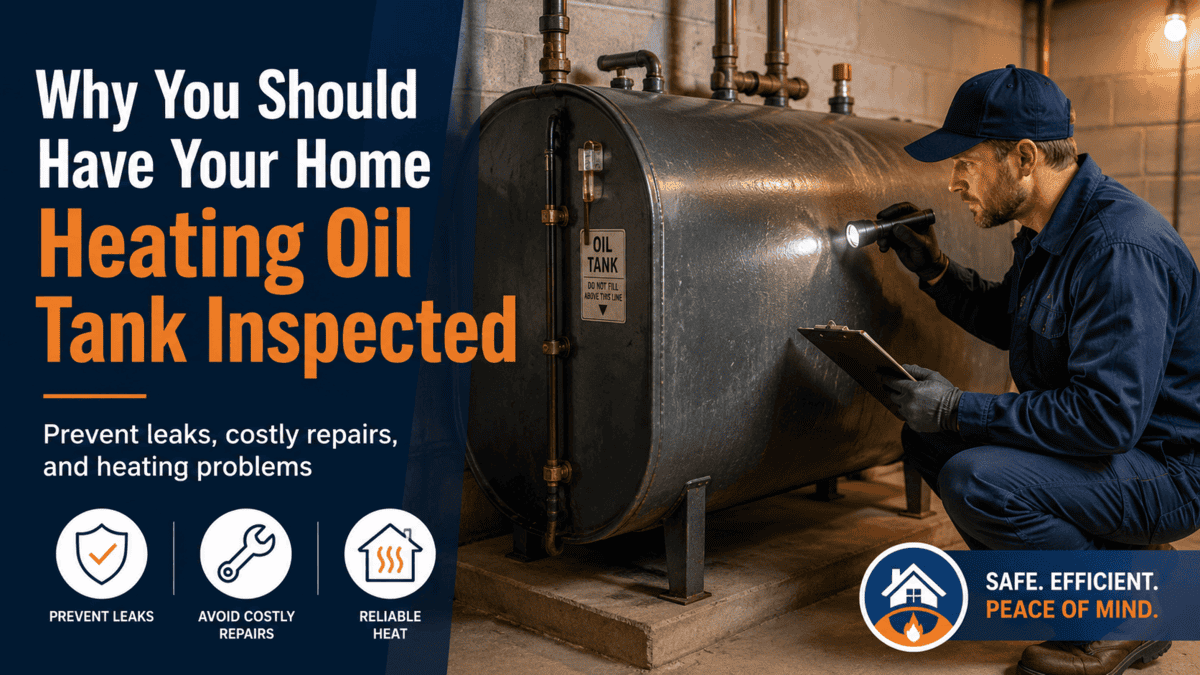
Why You Should Have Your Home Heating Oil Tank Inspected
A heating oil tank inspection is one of the simplest ways to protect your home — and one of the most commonly skipped. Your oil tank quietly stores the fuel that keeps your family warm all winter, yet it often goes years without anyone taking a close look at it. As oil tanks age, the risk of leaks, property damage, and costly repairs climbs steadily.
A single inspection each year can identify problems before they turn into expensive emergencies — and before your home heating system quits on the coldest night of the year.
What this guide covers
Warning Signs Your Oil Tank Needs Attention Now
Schedule a heating oil tank inspection right away if you notice any of these:
- A wet spot, dark stain, or pooling oil underneath the tank
- A persistent fuel oil odor in the basement, garage, or yard
- Rust, pitting, or bubbling paint anywhere on the steel
- Legs that look corroded, bent, or are sinking into the floor or pad
- A tank that no longer sits level
- Fuel use that suddenly climbs with no change in the weather
Any one of these is a reason to stop guessing and have the tank looked at.
How Often Should You Have a Heating Oil Tank Inspection?
Once a year, and the best time is late summer or early fall — before the heating season begins and before schedules tighten up. That timing gives you room to plan a repair or replacement instead of reacting to a failure in January.
If your tank is 15 years or older, the annual inspection stops being optional. Past 20 years, it is worth having the tank’s overall condition assessed so you can decide on replacement on your own timeline rather than after a spill.
How Long Does an Oil Tank Last?
Every oil tank is different, but the average lifespan of a residential steel oil tank is:
- Indoor steel tanks: 20–30 years
- Outdoor steel tanks: 15–25 years (weather exposure can shorten their life)
As a rule of thumb, here is how a tank’s age should shape your plan:
| Tank age | What we recommend |
|---|---|
| Under 10 years | Annual heating oil tank inspection; keep the tank painted and as full as practical |
| 10–15 years | Annual inspection with closer attention to legs, seams, and oil lines |
| 15–20 years | Annual inspection plus a full condition assessment; begin budgeting for replacement |
| 20–25 years | Inspect and actively plan replacement; expect questions from your insurer |
| Over 25 years | Replacement is usually the safer and cheaper option |
Several factors affect how long a tank will last, including:
- Moisture and humidity
- Rust and corrosion
- Installation quality
- Routine maintenance
- Exposure to rain, snow, and changing temperatures
Just because a tank has never leaked doesn’t mean it is in good condition. Many tanks show very little warning before they fail.
Why Oil Tank Legs Matter
The legs support the entire weight of the tank, which can exceed 2,000 pounds when full of heating oil.
Over time, tank legs can:
- Rust and corrode
- Weaken where they contact the floor or concrete pad
- Bend or become unstable
- Shift if the ground or floor settles
If the legs fail, the tank can lean or even collapse, causing a significant oil spill.
During an inspection, a technician checks that:
- The legs are solid and free of excessive rust.
- The tank sits level.
- There are no signs of movement or instability.
Inspecting the Tank Body for Rust and Leaks
The tank itself should be inspected for signs of aging and deterioration.
A technician looks for:
- Rust or corrosion
- Pitting in the steel
- Dents or physical damage
- Wet spots or oil stains
- Leaks around fittings
- Signs of moisture collecting underneath the tank
Small rust spots can eventually develop into pinhole leaks that release heating oil into your home or onto your property, which is exactly the kind of failure that leads to an emergency heating service call.
Inspecting the Oil Lines and Fittings
The oil line carries fuel from the tank to your furnace or boiler.
Over time, oil lines can:
- Rust or corrode
- Become damaged or kinked
- Rub against building materials
- Develop slow leaks
Even a small oil leak can create strong odors, reduce heating system performance, and result in expensive cleanup costs. If your furnace or boiler has been running rough, it may be worth pairing your tank inspection with heater repair service.
Outdoor Tanks Need Extra Care
Outdoor oil tanks are exposed to rain, snow, sunlight, and changing temperatures all year long. These conditions make regular maintenance especially important.
Keep the Tank Properly Painted
The paint on an outdoor oil tank is more than just cosmetic—it helps protect the steel from rust and corrosion.
As paint begins to peel or fade, moisture can reach the bare metal and start the corrosion process. Touching up worn areas or repainting the tank when needed can significantly extend its service life.
During an inspection, the tank should be checked for:
- Peeling or chipped paint
- Surface rust
- Corrosion around seams and fittings
- Rust developing underneath the tank
Keeping the tank clean and properly painted is one of the easiest ways to help protect your investment.
Keep the Tank as Full as Practical
One of the best ways to protect an outdoor oil tank is to keep it as full as practical, especially during the colder months and over the summer when the tank may not be used as often.
A tank with a large air space allows moisture to form inside as temperatures rise and fall. This condensation collects as water in the bottom of the tank.
Water inside the tank can:
- Cause rust from the inside out
- Plug oil filters
- Promote sludge formation
- Damage fuel pumps and burners
- Lead to poor system performance and costly repairs
Keeping the tank fuller reduces the amount of air inside the tank, which helps minimize condensation and the water problems that can follow.
Why Oil Tank Age Matters (and What Insurers Ask)
Steel naturally corrodes over time. Even if a tank looks good on the outside, corrosion can begin from the inside due to water that settles in the bottom of the tank.
As tanks age:
- The steel gradually becomes thinner.
- Rust becomes more common.
- The likelihood of leaks increases.
- Insurance companies may limit or deny coverage on older tanks.
Many insurance companies begin asking questions once a tank reaches 20–25 years old, and some require replacement after a certain age.
The Cost of Skipping a Heating Oil Tank Inspection
A leaking oil tank can lead to:
- Damage to floors, foundations, or landscaping
- Contaminated soil
- Environmental cleanup
- Expensive repairs
- Loss of heating fuel
- Insurance complications
Cleanup costs can range from several thousand dollars to tens of thousands of dollars depending on the severity of the leak.
What a Yearly Heating Oil Tank Inspection Gives You
A yearly heating oil tank inspection is a simple and inexpensive way to protect your home and your investment. Catching problems early allows repairs or replacement to be planned before a leak occurs, and it pairs naturally with a Ranck maintenance plan that keeps the rest of your heating system on schedule.
An inspection can help:
- Improve safety
- Reduce the chance of an unexpected leak
- Extend the life of your heating system
- Protect your property
- Provide peace of mind for you and your family
Heating Oil Tank Inspections in Lancaster County and Beyond
Heating oil is still a common fuel across South Central Pennsylvania, and our older housing stock means a lot of tanks are already past the 20-year mark. Ranck technicians perform heating oil tank inspections for homeowners throughout Lancaster, Berks, Chester, Dauphin, Lebanon, and York counties.
Because we also service the furnaces and boilers those tanks feed, we can evaluate the whole system in a single visit instead of sending you to a second contractor. Pennsylvania homeowners can also review the PA DEP storage tank program and the EPA’s guidance on storage tanks for background on spill responsibility.
Heating Oil Tank Inspection FAQs
How often should a heating oil tank be inspected?
Once a year for every tank, and without exception for tanks 15 years or older. Late summer or early fall is the ideal window, before the heating season starts and before technician schedules fill up.
How long does a heating oil tank last?
Indoor steel tanks generally last 20 to 30 years and outdoor steel tanks 15 to 25 years. Moisture, weather exposure, installation quality, and how consistently the tank has been maintained all shift that range.
What are the warning signs that an oil tank is failing?
Wet spots or oil staining under the tank, a persistent fuel odor, rust or pitting in the steel, peeling paint on an outdoor tank, corroded or unstable legs, a tank that no longer sits level, and unexplained fuel loss.
How much does a heating oil tank inspection cost?
An inspection is minor compared with the alternative. Cleanup after an oil tank leak commonly runs from several thousand dollars into the tens of thousands. Ask us for current pricing when you schedule, and review our financing options if replacement turns out to be the right call.
Will my insurance company make me replace an older oil tank?
Many insurers begin asking questions once a tank reaches 20 to 25 years, and some require replacement beyond a certain age. A documented annual inspection gives you something concrete to show them.
Should I keep my oil tank full over the summer?
Yes. Keeping the tank as full as practical shrinks the air space where condensation forms. That water is what drives rust from the inside out, sludge buildup, plugged filters, and damaged fuel pumps.
Trust Ranck With Your Heating Oil Tank Inspection
If your oil tank is 15 years old or older, regular inspections become even more important. If it is 20 years old or older, Ranck can help you evaluate its condition and understand when replacement should be considered.
Ranck’s experienced heating professionals can check for concerns such as:
- Rust, corrosion, or visible signs of deterioration
- Unstable tank legs or an unlevel tank
- Leaks or staining around the tank, fittings, and oil lines
- Outdoor-tank wear caused by weather exposure and moisture
Don’t wait for a small concern to become a costly oil leak. Trust Ranck to inspect your oil tank, explain what we find, and recommend the right next step for your home. Schedule a heating oil tank inspection online, visit JustCallRanck.com, or call 717-397-2577.